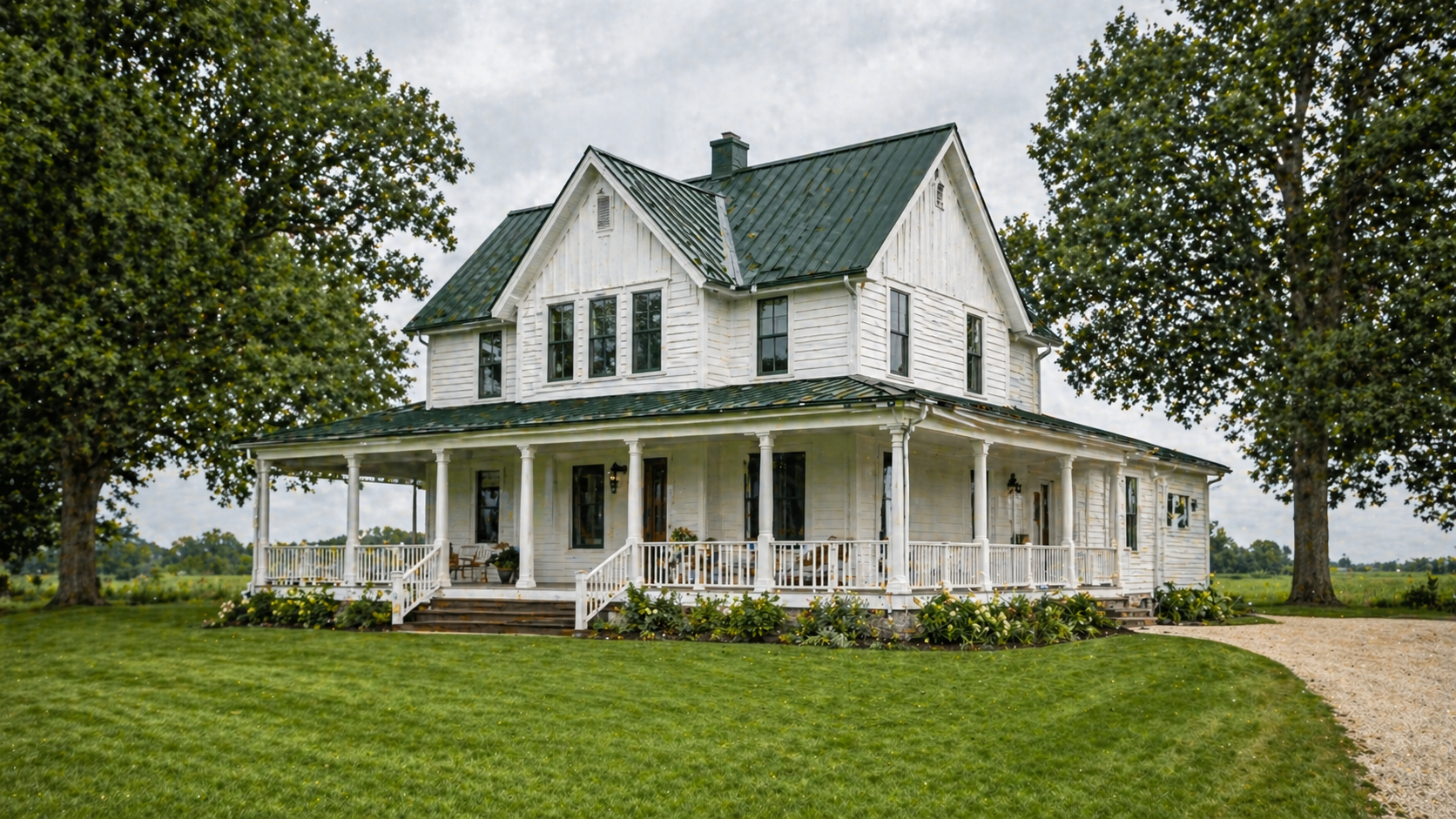
Southern Minnesota farmhouses come with predictable inspection findings: outdated electrical service, galvanized plumbing, foundation movement, well/septic considerations, outbuilding condition, original mechanicals, and deferred roof maintenance. The good ones have been actively maintained — many have not.
1. Original electrical service
Most farmhouses we inspect still have 60-100 amp electrical service installed when modern appliances did not exist. Today's electric stove, dryer, A/C, hot tub, charging EVs — none of that fits in a 100-amp panel. Service upgrade to 200 amps typically costs $2,500-$5,000.
2. Galvanized supply piping
Pre-1960 farmhouses almost universally have galvanized supply lines that are now 60+ years old. Internal corrosion has reduced flow significantly and the pipe walls are brittle. Whole-house repipe with PEX typically runs $4,000-$8,000.
3. Foundation movement from clay soil
Southern Minnesota's heavy clay soils cause more foundation movement than any other region in the state. Hairline cracks are universal; bowing walls and active settlement require structural engineer evaluation. We find significant foundation issues on roughly 30% of pre-1950 farmhouses we inspect.
4. Well and septic considerations
Most farmhouses are on private well and septic. Critical questions:
- Well age and depth (older shallow wells often have nitrate or bacteria issues)
- Pump age and condition
- Water testing — bacteria, nitrates, hardness, iron
- Septic tank age and capacity
- Drainfield condition
- Septic compliance certificate (required for transfer in many MN counties)
5. Outbuilding condition
Many farmhouses come with substantial outbuildings — barns, silos, equipment sheds, milking parlors. These can add significant value or significant liability. Common issues:
- Roof condition (often worse than house roof)
- Structural concerns — old barns with original beams
- Foundation settlement
- Electrical safety in working barns
- Wind damage and weatherproofing
6. Original mechanicals
Furnace, water heater, A/C — many farmhouses have original equipment that is now 25-40 years old. Boiler systems are particularly common in older farmhouses and have their own service-life and inspection considerations.
7. Deferred roof maintenance
Farmhouse roofs often span multiple structures (main house, addition, attached garage, porch) and have multiple flashing transitions. Each is a potential leak point. Many farmhouses have one or two original roof sections that have been "patched" repeatedly without full replacement.
Common farmhouse questions
How is a farmhouse inspection different from a standard home inspection?
Farmhouses include outbuildings, well, septic, and rural-specific systems that suburban inspections do not cover. A thorough farmhouse inspection takes 4-6 hours and may include separate fees for substantial outbuildings.
What should I look for in a southern Minnesota farmhouse?
Original electrical service often inadequate for modern loads, galvanized supply piping with reduced flow, well water quality and quantity, septic system condition and capacity, outbuilding structural integrity, and roof condition on multiple structures.
Do you inspect wells and septic?
We visually evaluate wellheads and septic visible components. Full well water testing and septic system inspection are typically performed by specialty contractors — we coordinate when needed.
How much does a farmhouse inspection cost?
Standard farmhouse with one or two outbuildings typically runs $500-$700, plus add-ons for water/septic specialists when needed. Use the instant quote tool for property-specific pricing.
Schedule a farmhouse inspection
Free instant quote in 60 seconds. We inspect rural and farmhouse properties across all 47+ cities in our service area.
Free Instant Quote →