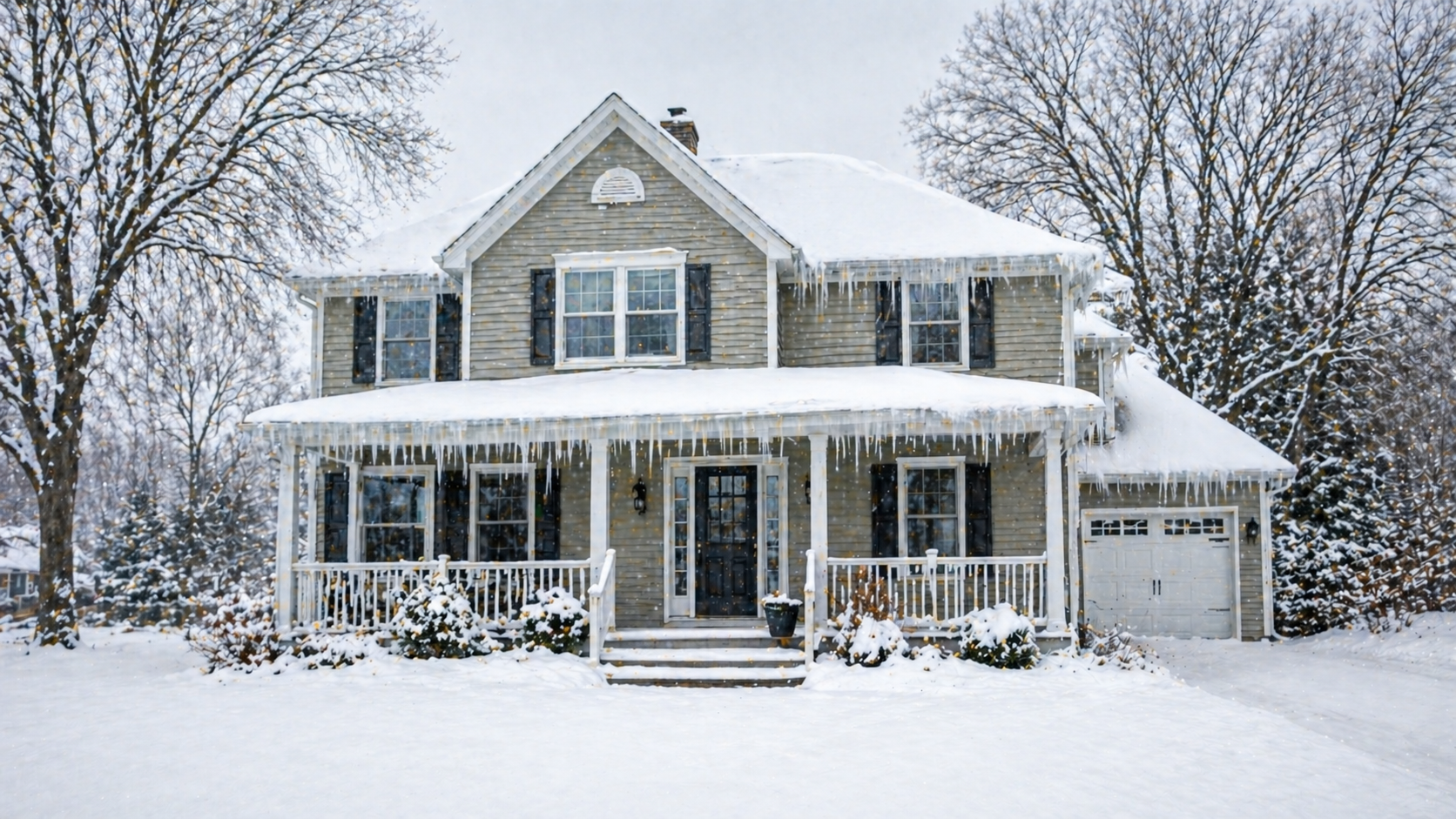
Ice dams are caused by heat loss through the ceiling combined with insufficient attic ventilation. They damage roofs, soffits, walls, and interior ceilings — typically costing $500-$10,000+ per event. Permanent fixes cost $2,000-$8,000 and address insulation and ventilation. A thorough home inspection identifies the conditions that cause ice dams before you buy.
Why southern Minnesota homes get ice dams
Ice dams form when three conditions are met: snow on the roof, warm interior air heating the roof from below, and cold outside temperatures. Southern Minnesota gets all three for months at a time.
What to look for during inspection
A thorough home inspection identifies these ice-dam risk indicators:
- Insufficient attic insulation: Less than R49 (about 14") in MN attics
- Missing or compressed soffit ventilation: Indicating poor air intake
- Bath fans venting into attic: Adding warm moisture to attic
- Visible past damage: Soffit/fascia damage, ceiling stains, paint bubbling at upper exterior walls
- Heat cables on roof edge: Indicates owner is managing an active ice-dam problem
- Visible ice/water shield only at edges: Suggests reactive (post-problem) installation
What ice dam damage costs
- Cosmetic ceiling/wall repair: $500-$2,500 per event
- Drywall/insulation/framing replacement: $2,000-$10,000+ per event
- Roof shingle replacement at affected sections: $1,500-$5,000
- Soffit and fascia replacement: $1,000-$5,000
- Permanent fix (insulation + ventilation + ice/water shield): $2,000-$8,000
The permanent fix
Roof-edge heat cables and seasonal ice dam removal are temporary measures. The permanent fix has three parts:
- Air-seal the ceiling. Top plates, bath fan housings, electrical penetrations, attic hatches — all need sealing to stop warm interior air from leaking into the attic.
- Add insulation. Bring attic insulation to current Minnesota energy code (R49). For most older homes this means adding 6-10" of blown cellulose on top of existing.
- Improve ventilation. Soffit-to-ridge airflow keeps attic temperature near outside temperature. Ice and water shield underlayment at the roof edge protects the deck during inevitable winter freeze-thaw cycles.
Common questions
What causes ice dams?
Heat loss from inside the home warms the roof, melting snow above. The melt water runs down to the colder roof edge, where it refreezes — building a dam of ice that traps subsequent meltwater behind it.
How can I tell if a house I am buying has an ice dam problem?
Look for ice damage to soffit/fascia, water staining inside upstairs walls or ceilings, water staining at the top of exterior walls just below the soffit, and any record of past ice dam removal.
How much does ice dam damage typically cost to fix?
Cosmetic ceiling/wall repair $500-$2,500. Replacement of damaged drywall/insulation/framing $2,000-$10,000. Ongoing prevention (insulation, ventilation, ice/water shield) $2,000-$8,000.
What is the permanent fix for ice dams?
Three-part: (1) air-seal the ceiling between conditioned space and attic, (2) add attic insulation to current code (R49 in MN), (3) ensure adequate soffit-to-ridge attic ventilation. Roof-edge heat cables are temporary fixes only.
Are ice dams covered by homeowners insurance?
Most policies cover the resulting interior water damage but not the cost of preventing future ice dams. Damage prevention work typically comes out of pocket.
Concerned about ice dams in your future home?
Our standard inspection evaluates attic insulation, ventilation, and visible past ice-dam damage. Get a free quote in 60 seconds.
Free Instant Quote →