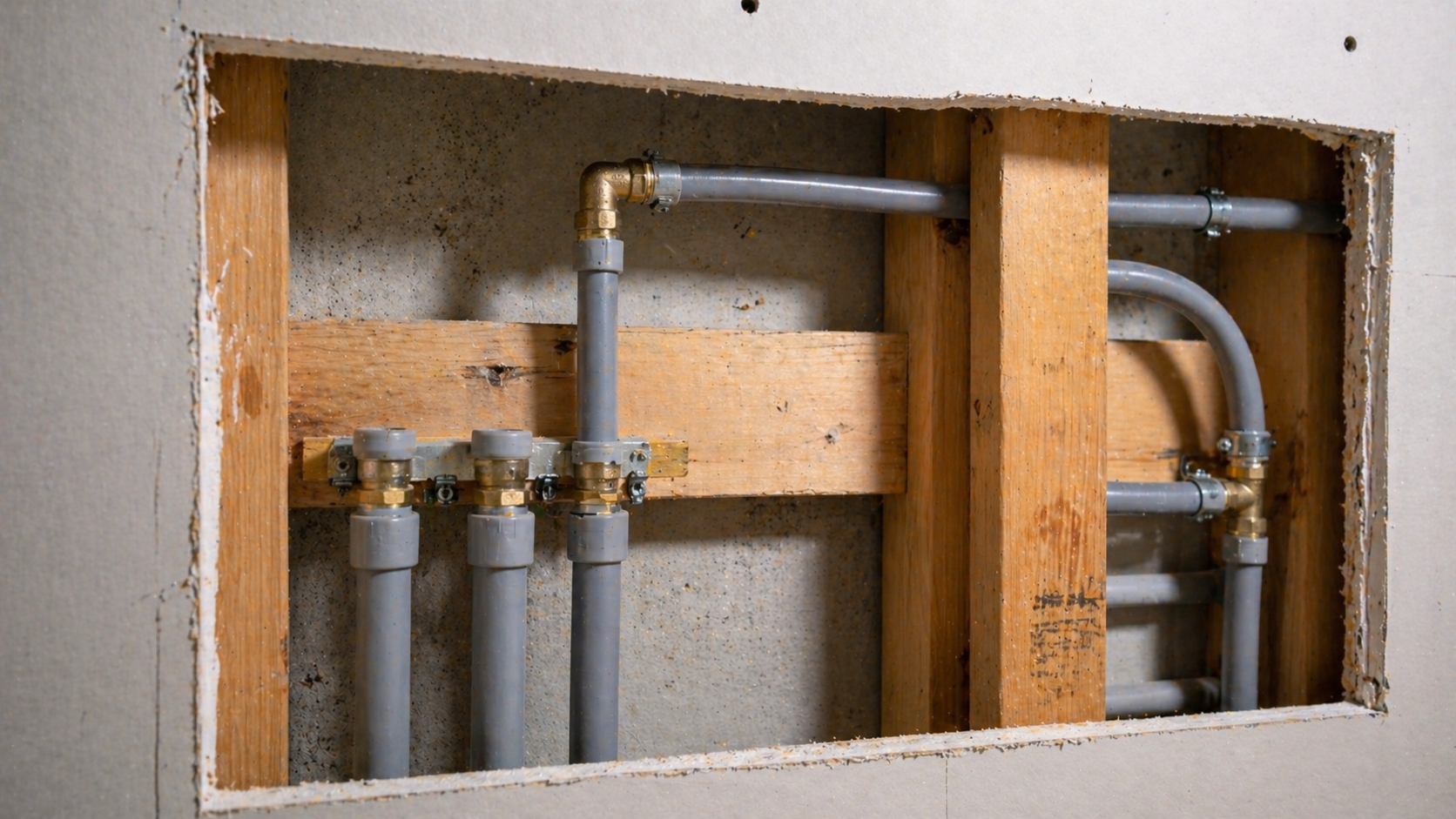
Polybutylene (PB) is a gray plastic pipe used in plumbing from 1978-1995 — including thousands of southern Minnesota and northern Iowa homes. It fails without warning due to chlorine degradation, often causing major water damage. Replacement runs $4,000-$8,000 and is commonly a seller-negotiated item.
What is polybutylene plumbing?
Polybutylene was a flexible plastic pipe marketed in the late 1970s as a cheaper alternative to copper. It looks similar to PEX (the modern flexible plumbing standard) but is actually quite different — and has a documented failure problem.
The pipe was installed in roughly 6 million homes nationwide between 1978 and 1995. After widespread failures, the manufacturer settled a class-action lawsuit and the product was pulled from the market.
How to identify polybutylene
Polybutylene is most easily identified by:
- Color: gray, blue-gray, or sometimes black flexible plastic
- Markings: stamped "PB" or "PB2110" along the pipe length
- Size: typically 1/2", 3/4", or 1" diameter
- Connections: originally crimp-style with metal or plastic fittings
- Common entry point: through the basement wall from the water main, then routed throughout the house
Why it fails
Polybutylene failure is caused by chlorine and oxidants in municipal water supply. These react with the polymer over time, creating microscopic fractures that grow until they fail. The failure mode is typically catastrophic — a sudden burst, not a slow drip.
Because failures happen inside walls and under floors, the first warning is usually discovered water damage. Average insurance claim for PB failure: $5,000-$25,000 depending on how long it ran before discovery.
What to do if you find polybutylene during inspection
Three options:
- Negotiate replacement: Most common path. Sellers often agree to PB-to-PEX repipe as part of inspection contingency.
- Negotiate credit: Seller provides cash credit at closing equal to expected repipe cost.
- Walk away: If the home has other major issues and PB is the deciding factor.
Insurance implications
Some insurance carriers in Minnesota and Iowa will not write new policies on homes with active polybutylene. Others will write but exclude PB-related water damage. Always confirm coverage with your insurance agent before closing on a home with PB.
Common questions
How do I know if my house has polybutylene plumbing?
Polybutylene is a gray or blue-gray flexible plastic pipe with "PB" markings. Common sizes are 1/2", 3/4", and 1". Most commonly found in homes built between 1978 and 1995, often entering through the basement wall and running to fixtures.
Is polybutylene plumbing dangerous?
Not dangerous in the toxic sense, but it is dangerous to your finances. PB pipes degrade from chlorine in municipal water and develop microscopic fractures that fail without warning — often catastrophically.
Will my insurance cover polybutylene damage?
Most homeowners insurance policies will pay for the water damage from a PB failure, but most will not cover replacement of the pipes themselves. Some carriers refuse to write policies on homes with active polybutylene.
How much does it cost to replace polybutylene?
In southern Minnesota and northern Iowa, full PB-to-PEX repipe typically runs $4,000-$8,000 depending on home size, pipe accessibility, and finishing requirements. This often becomes a negotiation item during home purchase.
Can I leave polybutylene in place?
Technically yes — but every PB system is on borrowed time. Most inspectors and plumbers strongly recommend proactive replacement before failure rather than reactive replacement after a flood.
Worried about polybutylene in your future home?
Our standard inspection identifies polybutylene wherever it is visible. Get a free quote in 60 seconds.
Free Instant Quote →